Categories
Lecture Announcements Lectures

“Ducetius, Timolean, and Agathocles: Sicilian Adventurism in the 5th and 4th centuries BCE” by Garret Denaro

We’re please to announce “Ducetius, Timolean, and Agathocles: Sicilian Adventurism in the 5th and 4th centuries BCE” by Garret Denaro.

Garret Denaro recently completed his Masters of Science in Ancient Worlds in 2023 at the University of Edinburgh. He received his Bachelor of Arts (with Honors) from the University of Connecticut for his thesis, “Minerva and the Capitoline Triad: A History of Cultural Exchange in Italy,”, focusing on the history of cultural exchange in Italy through the transmission of Minerva through Greek, Etruscan, Faliscan, and Roman depictions. Garret’s research follows cultural exchange and social developments of Italic populations.
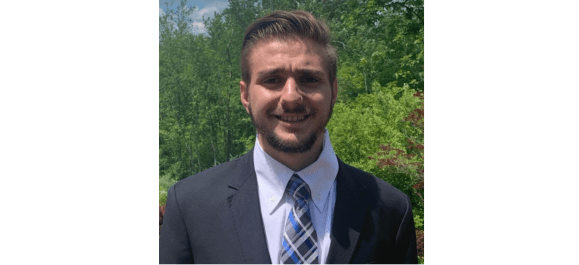
Image of smiling man

Scholarship has often viewed ancient Greek colonies on the island of Sicily from the Greek perspective, but examining Greek-Sicel interactions from the viewpoint of “adventurism” reveals more about leadership of the island’s populations, regardless of ethnicity.

Garret provided us with the following abstract:

“Foundational scholarship on Archaic Sicily focuses on the contentions between native populations and Greek colonizers from a squarely Greco-Roman perspective. Modern scholarship is refocusing the native Sicilian context and examining Archaic Sicily through more encompassing lenses, irrespective of ethnic background. One of these areas is the “adventurism” of Sicilian political figures, where fluid political and military maneuvering created new political leadership in Sicily across ethnic lines. 

Three figures fit the mold of a Sicilian adventurer. Timolean of Corinth and Agathocles of Syracuse are two Greek figures who created a name for themselves in Sicily. Preceding them, the Sicel Cucetius stepped into a political vacuum and created a short-lived but politically active native confederation. The aim of this presentation is to use these three figures as points of insight into the political adventurism – irrespective of ethnic lines – of Archaic Sicily.”

Garret has not asked us to share any content warning with our audience.

Categories
Lecture Announcements Lectures

“Tracing Roman-Palmyrene Identity in the 2nd Century CE: Male Agrippa and the Temple of Baalshamin” by Kimiko Adler

AATAW is thrilled to present Kimiko Adler’s video lecture, “Tracing Roman-Palmyrene Identity in the 2nd Century CE: Male Agrippa and the Temple of Baalshamin.”

Kimiko Adler is a first-year PhD student in the Department of Classics at NYU. She received her BA in Classical Studies and Government from Claremont McKenna College in 2023, writing her thesis on Roman literary representations of Jews and cult of Isis devotees during the imperial period. Her research centers on the archaeology of the Roman Eastern Mediterranean, analyzing the layered cultural histories of religious spaces in Roman Egypt, Judaea, and Syria. She has previously interned at the American Academy of Rome (2021) and the Getty Villa (2021) and has excavated at Morgantina (2023) and Gabii (2022). 

Kimiko has provided us with the following abstract:

“In the second century CE Palmyra, Male Agrippa, a local elite, sponsored extensive renovations at the sanctuary of Baalshamin, which included the addition of a Roman-style temple, and he was subsequently celebrated in a bilingual (Greek-Palmyrene and Aramaic) inscription for his contributions. That renovation included the addition of Roman and Hellenistic elements to the Syrian-style shrine that had dated back to before Roman control of the city. Understood together, the temple and its inscription express a multi-layered cultural identity for Male Agrippa, and by extension, for Roman-Palmyrenes. The Temple of Baalshamin, and specifically the inscription commemorating Male Agrippa, is a case study for understanding cultural change and continuity in Palmyra.” 

Categories
Lecture Announcements Lectures

“The Mysterious Origins of Zagreus: How Ancient Myth Inspired the Music of Hades” by Sierra Schiano

We are delighted to present Sierra Schiano’s video lecture, “The Mysterious Origins of Zagreus: How Ancient Myth Inspired the Music of Hades.”

Sierra Schiano is a mobile educator for the Los Angeles County Museum of Art who holds an MA in Classical Antiquity from the University of Colorado, Boulder. A lifelong fan of Classical reception, Sierra’s research focuses on how the ancient Mediterranean is reimagined in contemporary pop culture and fandom media. 

Sierra provided us with the following abstract and content warnings:

“For the wildly popular 2020 video game Hades, Darren Korb composed the “Hymn to Zagreus” – a song dedicated to Hades’ protagonist and sung in-game by the legendary musician Orpheus. Though the game contextualizes this song as the result of an elaborate prank, the Hymn is in fact steeped in ancient myth. It evokes a lesser-known mythical tradition in which Zagreus was believed to be an earlier incarnation of the wine-god Dionysus. These “Orphic” myths are thought to lie at the heart of the “mysteries of Dionysus” – a secretive religious tradition in which ancient Mediterraneans worshiped Dionysus as a mediator between the worlds of the living and the dead. This lecture analyzes each verse of the “Hymn to Zagreus” to reveal how it was inspired by ancient Greek religion and influenced by modern scholarship on the Orphic tradition. Taking the Hymn together with the game’s plot and mechanics, I demonstrate how Hades invents an origin to the mysteries of Dionysus.”

Content warnings: discussion of sexual violence, cannibalism, and violent death. 

Categories
News and Updates

AATAW at the AIAs!

All About the Ancient World team members Emily and Kristine will be at the 2024 Archaeological Institute of America/Society for Classical Studies Annual Meeting in Chicago this weekend! Say hi and look for our iconic orange cards to learn more about us!

Categories
Earlier Lectures Lectures

“Reexamining the Visual Impact of the Togate Body” by Erin Bello

We are excited to share Erin Bello’s video lecture, “Reexamining the Visual Impact of the Togate Body: Deviations and Codified Representations.”

Erin Bello received her Bachelors degrees in both Art History and Classical Civilizations from  the University of North Carolina at Asheville. She then attended John Cabot University for her Masters in Rome where her research focused on Roman statuary. She returned to Italy again to  attend the certification program for the Association for Research into Crimes against Art and is currently studying underwater cultural heritage crimes across the Mediterranean. 


This presentation explores how the toga was depicted in Roman art, and what it represented.

Erin provided us with the following abstract:

“The ideal of the gens togata has framed scholarship around statuary and reliefs of the togate statue body and has served to eliminate the narrative beyond a codification of symbols as indication of status and achievements. The visual dialogue of the togate consists of the juxtaposition and tension between the face and body, male and female depictions, and between other togate statue bodies. The authority of the statue relies on the object’s reception among others of similar appearance while maintaining a sense of personalization, communicating through the expectation of the viewers in a public space. Through an expanding examination of the togate statue body as means of an actual garment, an object, an ideal, and a codified language in of itself, this paper seeks to examine the visual impact of these statue types among themselves and the public landscape of the Roman world.”

Erin has not asked us to share any content warnings with our audience.

Categories
News and Updates

Meet The Team

Meet the volunteers behind the All About the Ancient World Team: Emily Prosch, Kristine Mallinson, Miranda Lovett, and Sierra Schiano! In this video, we discuss things like why we created AATAW, why it’s an online format, why we value ECRs, and our own love for the ancient world.

Learn more about our Team here: https://aatancientworld.com/meet-the-team/

Categories
News and Updates

Visit us at the Annual AIA/SCS Meeting!

We’re delighted to be presenting at the Ancient MakerSpaces Workshop the morning of Saturday, January 7th, 2023 in New Orleans at the joint Annual Meeting for the Archaeological Institute of America and Society for Classical Studies. If you’re attending the conference (whether in-person or virtually) come by and say hello. We can’t wait to present AATAW as an ongoing project, and learn more about other digital humanities projects.

Categories
Earlier Lectures Lectures

“Something Old, Something New: Using Technological Tools to Link the Past to Modern Audiences” by Neecole A. Gregory

We’re pleased to present “Something Old, Something New: Using Technological Tools to Link the Past to Modern Audiences” by Neecole A. Gregory.

Due to an obsession that started early, Neecole Gregory began dedicating her academic career to the ancient world. She received her BA from Randolph-Macon College in both Archeology and Classical Studies. In the last year, Neecole received her MA in Museum Practices and certification in Museum Studies from the University of Memphis. Despite initially entering the U of M through their Egyptology program, Neecole quickly found that she enjoyed engaging the public with the ancient world which led to her transition into Museology. Neecole’s ambition stems from the excitement of grasping the attention of future generations so that they can develop into aspiring adults who understand the significance of the humanities. This goal is expressed in her current adjunct work at the University of Memphis, teaching introductory art and art history courses. Alongside this, Neecole works with the National Emerging Museum Professionals Network and their Advocacy committee where she promotes more attainable opportunities for those new to the museum world. As the dust clears after the devastation of COVID-19, Neecole hopes to find a progressive institution where she and her ambitions can be an asset. Until then, she enjoys catering to her other passion of cooking as a kitchen manager in a famous breakfast restaurant in Memphis, Tennessee as well as traveling whenever she can.

This presentation explores how museums and institutions can apply different technologies to better engage their audiences.

Neecole provided us with the following abstract:

“Institutions and sites that house ancient objects must compete daily with modern distractions, mainly technology. Adjusting to this new reality, many establishments have decided to utilize these digital tools to better engage a more active, diverse audience. By utilizing devices such as smartphones, 3D documentation, augmented and virtual reality, cultural organizations can foster memorable and personalized interactions with visitors. Currently, there is a large gap in the literature that covers cross-examinations of multiple projects that implement these technologies. A review of case studies and scholarly research on the individual digital tools would present common variables in technological-based public programs that make them successful. Additionally, it would also produce the required materials and labor necessary to start these projects. Comparing this information to the needs of the modern audience member would show the reason why institutions should see these technologies as tools for the future.”

Neecole has not asked us to share any content warnings with our audience.

Categories
News and Updates

Ancient Worlds, Modern Communities Grant

AATAW is proud to announce that we have been selected as one of the Ancient Worlds, Modern Communities grant recipients for 2022!

As part of the Society for Classical Studies, this initiative supports projects which create pathways for knowledge exchange about the ancient world beyond the classroom to engage broader publics.

We’ll be using this funding to cover some of our start-up costs, such as commissioning Jenni Perdzock for our amazing logo, and to advertise AATAW to potential new viewers and lecturers! Check out more of Jenni’s work here.

If you’re interested in creating a video lecture with AATAW, check out our Call for Papers! We’ll be reviewing abstracts due September 1st, 2022!

Alt Text
The Ancient Worlds, Modern Communities logo.

Categories
How To Videos News and Updates

How to Record Video Lectures

Nervous about recording a video lecture? We can show you how!

In this video, we cover the basics of how to record with PowerPoint, Zoom, Panopto, and OBS Studio. You’ll also learn how to record in the style of “traditional online lectures” and “YouTube video essays.” This video is great for Early Career Researchers presenting with AATAW, teachers leading online classes or delivering remote instruction, scholars presenting at virtual or hybrid academic conferences, and any beginner who wants to learn how to record a basic video lecture!

Check out our presenter guidelines for more suggestions on creating video lectures.

Links to recording tools featured in video:
Purchase PowerPoint here: https://www.microsoft.com/en-us/microsoft-365/p/powerpoint/cfq7ttc0hlg1?activetab=pivot:overviewtab
Download Zoom here: https://zoom.us/download
Sign up for Panopto here: https://www.panopto.com/plans/?origin=nav
Download OBS Studio here: https://obsproject.com/